
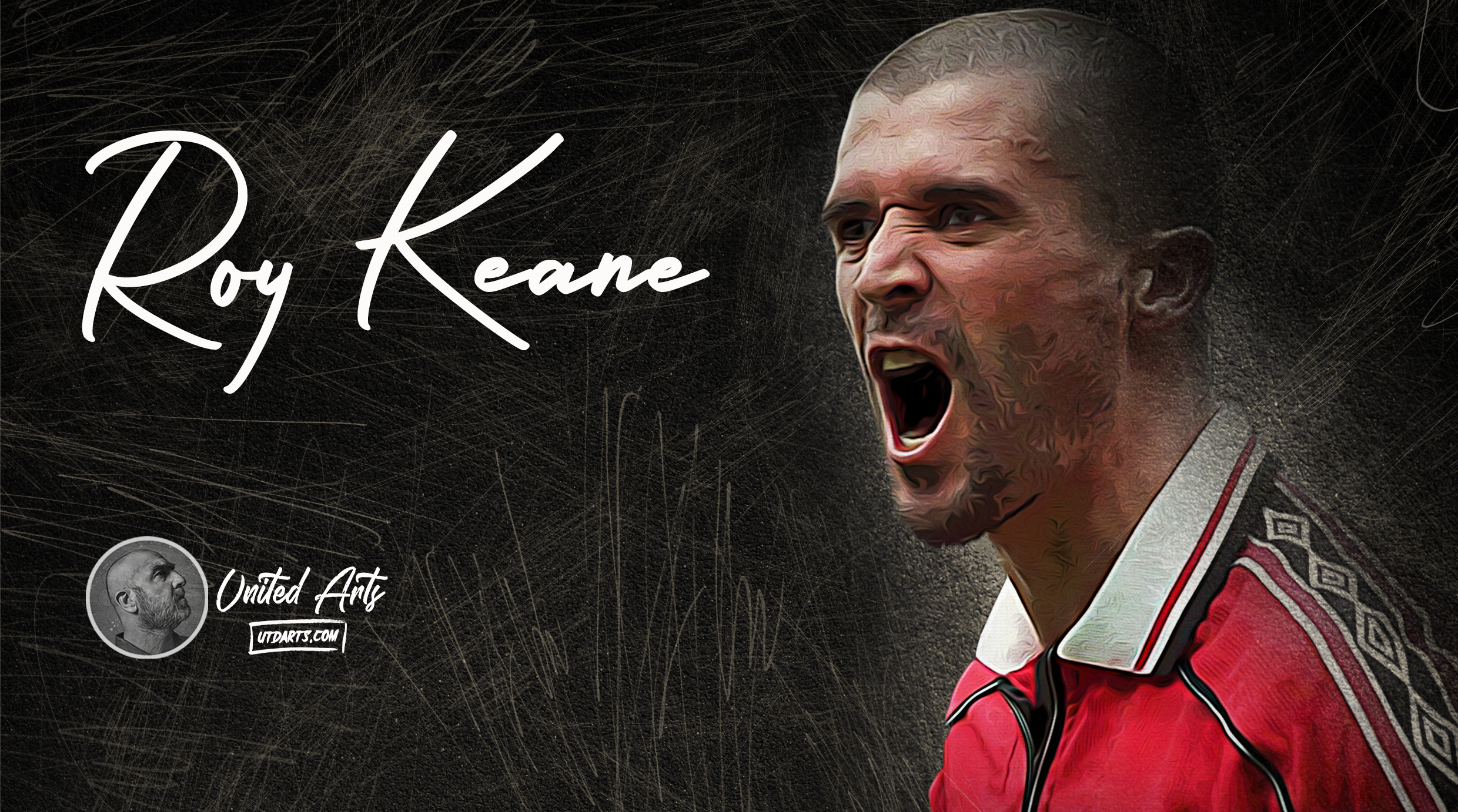
Roy Keane is one of football’s most iconic and polarising figures with a career defined by unparalleled passion, fierce leadership, and an unwavering commitment to winning.
From his humble beginnings in Ireland to a storied career at Manchester United, a controversial exit, and unmatched leadership of the Irish national team, his journey is a compelling tale of triumph, adversity, and unyielding determination.
Born on August 10, 1971, in Cork, Ireland, into a proud working-class family, football was central to his life from an early age, and he quickly developed a reputation as a tenacious, hard-working individual.
The passionate youngster first joined Rockmount, a local youth club, where his tenacity, aggression, and work ethic stood out, setting him apart from his peers.
Despite harbouring dreams of playing professional football, his early years were challenging, as he was rejected by several English clubs due to his size, with many scouts insisting it would hinder his development.
Nevertheless, the Mayfield boy was determined, and his breakthrough deservedly came with Cobh Ramblers, a semi-professional team in Ireland.
When Roy Keane met Brian Clough
Inevitably, his performances in Ireland caught the attention of those across the water, and in 1990, at 18, Keane was signed by Nottingham Forest for a modest fee.
Under the legendary Brian Clough, he found a mentor who would forever shape his approach to the game.
Clough’s old-school, no-nonsense management style resonated with the working-class Irishman, who thrived in the competitive surroundings.
Despite his youth, Keane made his debut that year and displayed remarkable leadership on the pitch, combining composed technical ability with the fierce determination that would become his trademark.
His performances earned widespread recognition, and the Cork man was soon considered one of the most promising young players in English football.
It was not long before bigger clubs started circling. In the summer of 1993, United swooped ahead of Blackburn Rovers with a then-British record transfer fee of £3.75 million to secure his services.
Career at Manchester United
Keane’s arrival in the North West coincided with the club’s rise to dominance under Sir Alex Ferguson.
The tenacious midfielder was brought in as a successor to Bryan Robson to fill the void at the heart of the team’s engine room. It was a big task for any footballer, but he was never one to shy away from responsibility.
Roy’s impact was immediate, and he quickly became a mainstay on Ferguson’s side, known for his relentless energy, aggressive tackling, and leadership qualities.
He was the driving force behind United’s midfield, dictating the tempo of games, breaking up opposition play, and pushing his teammates to give their all. The Reds’ dominance during the 1990s and early 2000s was, in many ways, embodied by the Celtic warrior’s influence.
His partnership with Paul Scholes was formidable, balancing a combative style with unrivalled creativity. Together, they formed the backbone of a team that would win numerous domestic titles.
One of Keane’s most iconic performances came during the 1998-99 season, a campaign that saw the Old Trafford outfit claim a historic treble.
In the second leg of the semi-final against Juventus, with United trailing, Keane put in an immense performance of character and determination. Despite receiving a yellow card that would rule him out of the final, he inspired a United comeback, leading them to a 3-2 victory.
Ferguson later described it as the most selfless performance he had ever seen, epitomising Keane’s leadership and commitment to the team.
Known for his outspoken nature, the Munster man was never afraid to voice his opinions, which eventually led to a clash with the equally fiery Ferguson.
The breaking point came in 2005 when Roy gave a now-infamous interview on the club’s in-house television channel, MUTV.
During the segment, he was said to have harshly criticised several of his teammates, questioning their commitment and professionalism. Ferguson, who had always valued unity within the squad, saw this as a breach of trust and discipline.
The fallout was swift. The Irishman was stripped of the captaincy and, after a series of heated meetings with Fergie and the club’s directors, his contract was terminated by mutual consent in November 2005.
His exit was controversial, and many fans were shocked by its suddenness. Despite the bitter end, his legacy at United remains intact; he is considered one of the club’s greatest captains.
The Celtic experience
Despite multiple offers for continental expeditions, Roy opted to move to Scottish giants Celtic, the club he had supported as a boy. Although his time in Glasgow was brief, it was significant.
He joined The Bhoys in January 2006 and helped the club secure the Scottish Premier League title and the League Cup.
The veteran’s leadership and experience were invaluable to the team, even as he struggled with injuries that had begun to take a toll on his body.
Inevitably, he retired from professional football in June 2006, bringing to an end a career spanning 18 years.
His time at the Hoops may have been short and not without pitfalls – most notably the relationship between himself and then-Celtic manager Gordon Strachan.
Still, it provided a fitting end to his playing days, allowing him to fulfil a childhood dream of wearing the famous green and white jersey.
International career and Irish legacy
Somewhat unsurprisingly, Keane’s international career with the Republic of Ireland was marked by brilliance and controversy.
He debuted for the national team in 1991 and was immediately showcased as a star performer, playing a crucial role in helping Ireland qualify for the 1994 FIFA World Cup.
However, his time in green is most famously associated with the 2002 World Cup in South Korea and Japan.
In the lead-up to the tournament, Ireland’s general had been increasingly frustrated with the team’s preparation and facilities, which he felt were substandard.
Tensions boiled over in a heated confrontation with manager Mick McCarthy in Saipan. Roy was highly critical of McCarthy’s management and the overall setup, accusing him and the FAI of incompetence.
The bust-up culminated in his departure from the camp, a decision that shocked the footballing world.
Ireland went on to perform admirably, reaching the Round of 16. Regardless, his absence was sorely felt, as the incident became one of the most talked-about moments in Irish sporting history (for the record, the author still sides with Keano!).
Despite the controversy, Keane’s impact on Irish football is undeniable.
He was a captain who led by example, driving his team forward with his performances. His commitment to his country was unquestionable, even if his methods were sometimes divisive.
Roy Keane’s career is a tale of fierce determination and a relentless pursuit of excellence. From his early days in Cork to his legendary status at Manchester United, he was a man who gave everything for his team.
While his time was not without controversy, and his temperament led to several high-profile clashes, these moments only added to the complexity of his character and the enduring fascination with his story.
Whether loved or loathed, Keano’s impact on football is indelible, and his legacy as one of the sport’s most outstanding leaders remains secure.
Let us know your fondest memories of the man in the comments or across our social channels.
Recent Posts
- The struggle to replace Peter Schmeichel in Manchester – Opinion

- Theatre of Red podcast | Episode 86 | Carrick endures his first setback

- Ten-man Newcastle hand Michael Carrick first defeat at Manchester United
